

Mushroom Foraging Manitoba Beginners Guide

Updated: Jul 5
The idea of mushroom foraging can scare people away before they even start, and people often ask me, how to know what is good or not? Well the best way is to start with the easiest ones, the ones with least amount of complicated look a likes. NOTE- DON'T USE THIS AS YOUR ONLY RESOURCE JUST USE THIS AS A GUIDE TO LEARN WHAT SOME OF THE EASIEST MUSHROOMS TO ID ARE- DO YOUR OWN FURTHER RESEARCH Mushroom Identification Basics

Before identifying any mushroom, learn the major parts:
Parts of a Mushroom
Cap (Pileus)
The top of the mushroom. Stem (Stipe)
The stalk supporting the cap.

Gills (Lamellae)
Thin blade-like structures beneath the cap where spores are produced. (Look at Oyster Mushroom)
Pores and Polypores

Tiny tubes underneath the cap instead of gills. Each pore or tube will transport the spores. Polypore mushroom is a general term. It means many (poly) pores
Teeth or Spines

Hanging spines instead of gills or pores. Found on hedgehogs and lion's mane relatives.

Ring (Annulus)
A skirt-like structure left behind from a partial veil.

Volva
Cup-like structure at the base of some mushrooms. Very important for
identifying dangerous Amanitas.
Mycelium

The fungal network web that grows undergrown or within the wood. It is sometimes considered to be the root system, where as the mushroom is the fruit, think of an apple tree and roots as the mycelium and the apple as mushroom or
fruiting body.

Spore Print
Spores dropped onto paper to reveal spore color, often critical for identification for mushrooms that are difficult to ID,
Little Brown Mushrooms (LBMs)
As you begin learning mushrooms, you'll eventually hear of "LBMs," short for Little Brown Mushrooms. This isn't a scientific group—it simply refers to the countless small brown mushrooms that can look very similar to one another.
We are not worrying about these, but it's great for you to know as a reference that there are tons of small little brown mushrooms that are hard to to ID known as LBMs Getting Help with Mushroom Identification
One of the best ways to be a better mushroom forager is to make your own attempt first. Before asking for help make sure you learn these mushrooms in the guide. Try using a field guide, an internet search or a mushroom identification app. Even if your guess is wrong, the process of researching and observing is how you build identification skills.
If you still struggle or need help than join and ask mushroom identification or foraging groups on Facebook. Many experienced foragers and mushroom enthusiasts are happy to help.
To get the best identification, provide more than just a single photo. Whenever possible, include:
The top of the cap
The underside (gills, pores, or teeth)
A side view
The entire mushroom, including the base of the stem
Nearby mushrooms of different ages
The surrounding habitat
Also include helpful details such as:
Your general location
Whether it was growing on wood, soil, moss, grass, or manure
Whether it was found in a forest, field, lawn, or wetland
Nearby tree species, if known
Any unusual smell
Color changes when bruised or cut
Spore print color, if available
Never eat a mushroom unless identification is certain.
Use multiple identification features.
Check habitat, season, and tree associations.
Learn poisonous look-alikes.
First-time edibles should be eaten in small amounts.
When in doubt, throw it out.
Taking spore prints can help especially for harder mushrooms
OK NOW THATS OUTTA THE WAY!! SOME OF THE EASIEST MUSHROOMS TO LEARN
Oyster Mushroom

Scientific Name
Pleurotus ostreatus group
Identification
Cap
Fan-shaped or oyster-shaped
White, gray, tan, or cream
Smooth surface
Gills
White
Run down the stem (decurrent)
Stem
Short or absent
Often off-center
Spore Print
White to pale lilac
Habitat
Usually growing on dead or dying hardwood trees but can also be found on live trees.
Season
Spring through fall.
Edibility
Excellent edible mushroom.
Look-Alikes
Angel Wings (less substantial, pure white, usually on conifers) LEARN IT https://www.youtube.com/watch?v=_yD89oNOgxw
Beginner Difficulty
⭐⭐ Easy
Key Identification Clues
Shelf-like growth
White decurrent gills
Growing on wood
Elm Oyster
Scientific Name
Hypsizygus ulmarius

Identification
Cap
White to cream
Rounded rather than oyster-shaped
Gills
White
Attached to stem
Stem
Well-developed central stem
Spore Print
White
Habitat
Dead and dying elm trees.
Season
Late summer through fall.
Edibility
Excellent.
Look-Alikes
White Clitocybe species.
Beginner Difficulty
⭐⭐ Easy
Key Identification Clues
Strong stem
Usually on elm
White cap and gills
Lion's Mane / Bear's Head / Comb Tooth

Scientific Name
Hericium species
Identification
Fruiting Body
Pure white
Covered with hanging teeth
Teeth
Icicle-like spines
Habitat
Hardwood trees.
Season
Late summer through fall.
Edibility
Excellent.
Look-Alikes
Very few dangerous look-alikes.
Beginner Difficulty
⭐ Very Easy
Key Identification Clues
White cascading teeth
No cap
Grows on wood

Black Morel
Scientific Name
Morchella species
Identification
Cap
Honeycomb appearance
Deep pits and ridges
Interior
Completely hollow
Habitat
Woodlands, burn areas, disturbed ground.
Season
Spring
Edibility
Excellent when cooked.
LOOK ALIKES - False Morels

Gyromitra species
Brain-like cap
Not hollow
Can contain dangerous toxins
Verpa species- not a true morel but considered edible
The stem connects to the top of the cap where as the true morel stem connects directly to the bottom of the cap
Different internal structure, and tends to be more fragile, falls apart easily.
Beginner Difficulty
⭐⭐⭐ Intermediate
Key Identification Clues
True morels are completely hollow
Honeycomb pits and ridges
Chanterelle
Scientific Name
Cantharellus species
Identification

Cap
Yellow to orange
Vase-shaped
Underside
False gills (ridges)
Forking ridges
Odor
Fruity, apricot-like
Habitat
Near living trees.
Season
Summer through fall.
Edibility
Excellent.
Look-Alikes
Jack-o'-Lantern mushroom.
Key Identification Clues
False gills
Fruity smell
Thick flesh
Puffball

Identification
Shape
Round
Interior
Pure white when edible
Warning
Never eat if any internal mushroom shape is visible when sliced.
Look-Alikes
Young Amanitas. BE CAREFUL WITH THIS ONE AND MAKE SURE ITS NOT A POTENTIALLY DANGEROUS MUSHROOM SUCH AS AMANITA
Lobster Mushroom
Scientific Name

Hypomyces lactifluorum
Identification
Color
Bright orange-red
Notes
Actually a parasitized Russula or Lactarius.
Edibility
Excellent.
Chicken of the Woods
Scientific Name
Laetiporus species

Identification
Color
Bright orange shelves
Yellow undersides
Habitat
Trees and logs.
Edibility
Excellent when young.

Ink Cap
Scientific Name
Coprinopsis species
Identification
Feature
Dissolves into black ink
Edibility
Some species edible when young.

Mica Cap
Scientific Name
Coprinellus micaceus
Identification
Cap
Tiny mica-like granules
Feature
Eventually liquefies.
Shaggy Mane

Scientific Name
Coprinus comatus
Identification
Cap
White shaggy scales
Edibility
Excellent when young and white.
Fairy Ring Mushroom

Scientific Name
Marasmius oreades
Identification
Habitat
Lawns and fairy rings
Edibility
Good edible.
Look-Alikes
Several toxic lawn mushrooms.
Jelly Ear (Wood Ear)

Scientific Name
Auricularia species
Identification
Texture
Jelly-like
Color
Brown
Habitat
Dead hardwood.
Uses
Popular in soups and stir-fries.
Coral Mushrooms

Identification
Shape
Branching coral-like structure
Warning
Some species are difficult to distinguish.
Sparassis crispa (CauliflowerMushroom)

Identification
Shape
Large curly mass
Color
Cream to pale yellow
Edibility
Excellent.
Maitake (Hen of the Woods)
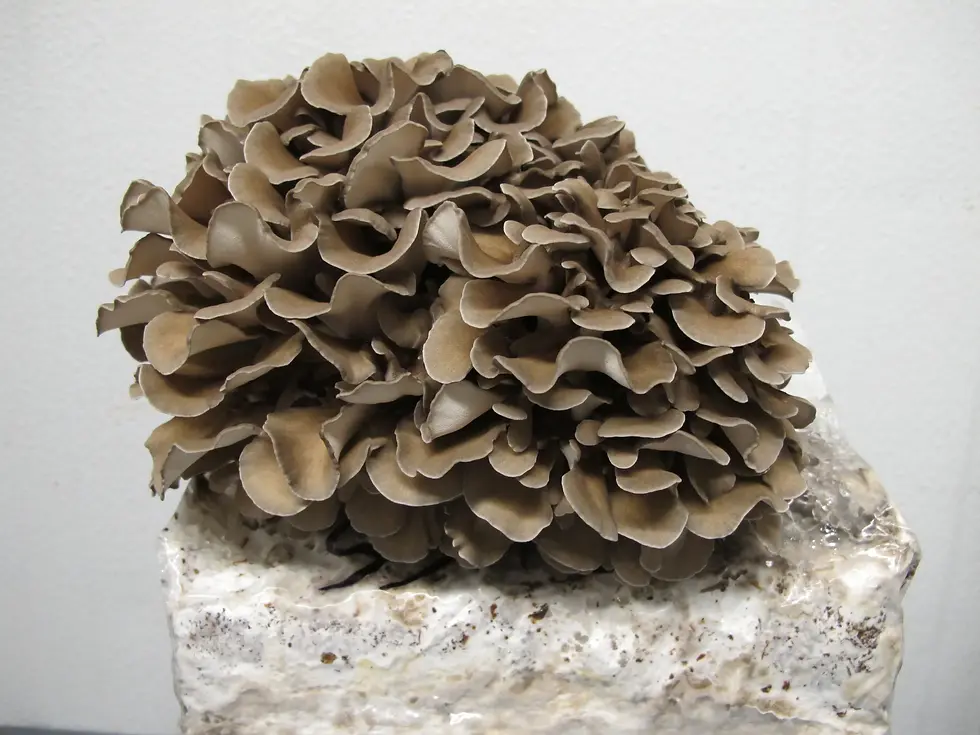
Scientific Name
Grifola frondosa
Identification
Growth
Large clustered rosettes
Color
Gray-brown fronds
Habitat
Base of hardwood trees.
Edibility
Excellent. MEDICINAL MUSHROOMS While some mushrooms are gourmet edibles, some mushrooms are more strictly medicinal due to their tough woody structure being too hard to eat but yet contain potent and valuable medicinal compounds. Turkey Tail
Scientific Name
Trametes versicolor
Identification

Shape
Thin shelf fungus
Color
Concentric color bands
Underside
Tiny white pores
Edibility
Generally used medicinally rather than eaten.
Look-Alikes
False Turkey Tail species.
Key Identification Clues
Velvety surface
Multiple color zones
White porous underside
Reishi

Scientific Name
Ganoderma species
Identification
Cap
Shiny varnished appearance
Red, orange, brown
Underside
White pores
Uses
Medicinal tea and extracts.
Edibility
Too tough for normal eating.
Chaga
Scientific Name
Inonotus obliquus
Identification
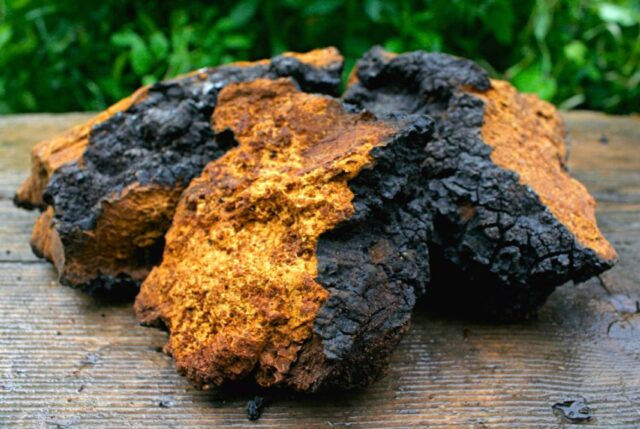
Appearance
Black charcoal-like mass
Interior
Rust-orange
Habitat
Primarily birch trees.
Uses
Medicinal tea.
Key Identification Clues
Only on birch
Black exterior
Orange interior Birch Polypore
Scientific Name
Fomitopsis betulina (formerly Piptoporus betulinus)
Identification
Cap

Round to hoof-shaped shelf fungus
White, cream, tan, or gray-brown
Smooth surface
Often grows in layers or shelves
Underside
Covered in tiny pores rather than gills
White when young, becoming cream or brown with age
Texture
Young specimens are firm and corky
Older specimens become hard and woody
Spore Print
White
Habitat
Almost always found on birch trees, especially dead or dying birch.
Edibility
Not considered a choice edible mushroom.
The flesh is tough and woody, making it unsuitable as a normal food mushroom.
Traditional Uses
Historically used in various cultures for practical purposes, including:
Making strops for sharpening blades
Carrying embers due to its slow-burning properties
Traditional medicinal preparations
Beginner Difficulty
⭐ Very Easy
Key Identification Clues
Growing on birch
White/tan shelf-like growth
Smooth top surface
Tiny pores underneath
Manitoba Poisonous Mushrooms Every Beginner Should Learn
Destroying Angels
Death Cap
Panther Cap
Fly Agaric
False Morels
Deadly Galerina BONUS ROUND- WHATS THAT MUSHROOM? These are some mushrooms I harvested, can you figure out what they are?


Comments